Rumor tracker Not announcedRelease date
Steam Deck 2: Valve is "hard at work", a mystery AMD chip and a long wait. Everything we know
Valve has confirmed it is building the next Steam Deck but will not say when, and it keeps saying today's chips are not good enough. Here is what Valve has said on the record, the AMD code name that has fans excited and why 2028 keeps coming up.
Valve has a habit of saying no to the Steam Deck 2. No yearly upgrades. No Deck with AMD’s Ryzen Z2. No device just because a slightly faster chip exists. But in April Valve finally said the thing fans wanted to hear: it is “hard at work” on the next Steam Deck.
The short version: there is no name, no date and no price. Valve wants a huge jump in performance at the same battery life, and it says the right chip does not exist yet. Leakers point to late 2027 or 2028. Meanwhile the current Steam Deck OLED has become a lot more expensive.
Valve’s rule: a real leap or nothing
Valve has been unusually clear about what a second-generation Deck needs. In October 2024 Steam Deck designer Lawrence Yang said Valve is “not doing the yearly cadence” and wants “a generational leap in compute without sacrificing battery life”. In January 2025 engineer Pierre-Loup Griffais said Valve wants big gains “within that 8-15 watt power envelope” and that a 20 to 30% gain is not enough.
By November 2025 the bar had gone up. Griffais said Valve is not interested in “20 or 30 or even 50% more performance at the same battery life”. Griffais also said Valve has “a pretty good idea” of what the next Deck looks like, but no chip on the market today would make a true next-generation one. A month later Griffais said Arm chips suit devices below the Deck’s performance and that it is “possible” Arm could suit something on its level one day.
“Hard at work”, but “in the coming years”
The tone shifted this year. In April Griffais said Valve is “hard at work” on the next Steam Deck and that it will build on lessons from Valve’s 2026 devices. In June Griffais said “we’re definitely getting there”, but that new chips still sit in power ranges that are “not quite the right segment” for a true handheld, and that Valve will talk about the next Deck “in the coming years”.
In September Griffais was asked whether the memory shortage had changed the plan. The answer: “not really”. Valve still wants “a very delineated performance improvement” and is weighing “how and when” to deliver it.
Busy with everything else
Valve has not been idle. In November 2025 it announced three new devices, none of them a Deck: a new Steam Controller, the Steam Machine and the Steam Frame. The Steam Machine launched through reservations in June at $1,049, and Valve says it has “over six times the horsepower of Steam Deck”. The Steam Frame followed in September from $1,059. Neither is a handheld.
Valve has also opened SteamOS to other handhelds. It added official support for the Lenovo Legion Go S in 2025 and, in September, a “Non-Valve Devices” section with better support for MSI Claw, OneXPlayer and others. If you want a new SteamOS handheld today, Valve no longer has to be the one that makes it.
The Gainsborough clue
The freshest lead is a name. An AMD graphics driver released on Sept. 29 contains an unannounced chip codenamed “Gainsborough”. The original Steam Deck chip is codenamed “Aerith”, and Aerith Gainsborough is a Final Fantasy VII character. That is the whole link to Valve, and neither company has commented.

Forum users then found customs records from late July listing test equipment for Gainsborough, for a 25 by 25 mm chip package. Some unnamed sources tie the same package to AMD’s own future handheld chips, so Valve may not even be the customer.
The leakers do not agree on what is inside. A hardware leak video channel with a mixed record says Gainsborough is a semi-custom AMD chip on TSMC’s 3nm process with Zen 6 CPU cores and RDNA 5 graphics. A hardware leaker with a strong record says the graphics are older, RDNA 3.5+ or RDNA 4m, and another user gives it just 12 graphics units. The video channel also says Valve has not decided whether to use Gainsborough at all or wait for something newer.
When: late 2027 or 2028
The two leakers do agree on timing. The one with the strong record has said since 2025 that Steam Deck 2 is planned for 2028, and warned in April that memory and storage shortages could push it back. The video channel says it will “almost certainly” launch in late 2027 or at some point in 2028.
Earlier dates look dead. A user on a Chinese hardware forum promised a Deck in the second half of 2026, and a hardware news site, citing an unnamed leak, named Nov. 26, 2026, at $649.99. Nothing has been announced, and Valve’s own comments rule out a chip that is only a small step up. Valve shot down a Z2-based Deck the day an AMD slide seemed to hint at one, and when shipping records named a faster AMD chip, Griffais replied “Not happening”. That chip ended up in a different handheld.
The price: start from $789
Valve has given no price, and no credible leak has either. What we do know is where the current model sits. The Steam Deck OLED launched at $549 and $649 in 2023. In May, citing memory and storage costs, Valve raised it to $789 for 512GB and $949 for 1TB, and said the Deck itself has not changed. Earlier this year the store warned of intermittent stock shortages, and Valve stopped making the last LCD model, the 256GB Steam Deck LCD, in December 2025.
With the new Steam Machine at $1,049, a next-generation handheld that is far faster at the same battery life is unlikely to come in cheap.
Expected price: from about $799. That’s our estimate, based on the Steam Deck OLED’s $789 today. With memory prices rising, it’s more likely to land higher than lower. Valve hasn’t announced a price.
What to watch next
There is no dated moment on Valve’s calendar. The signals to watch are Valve’s own interviews, where Griffais has been the most open voice, and AMD’s chip announcements. If a low-power chip with a big leap shows up, Valve’s long list of “not yet” answers could finally turn into a yes.
Our latest report: Steam Machine price and release date: $1,049 and up, and you still need a reservation
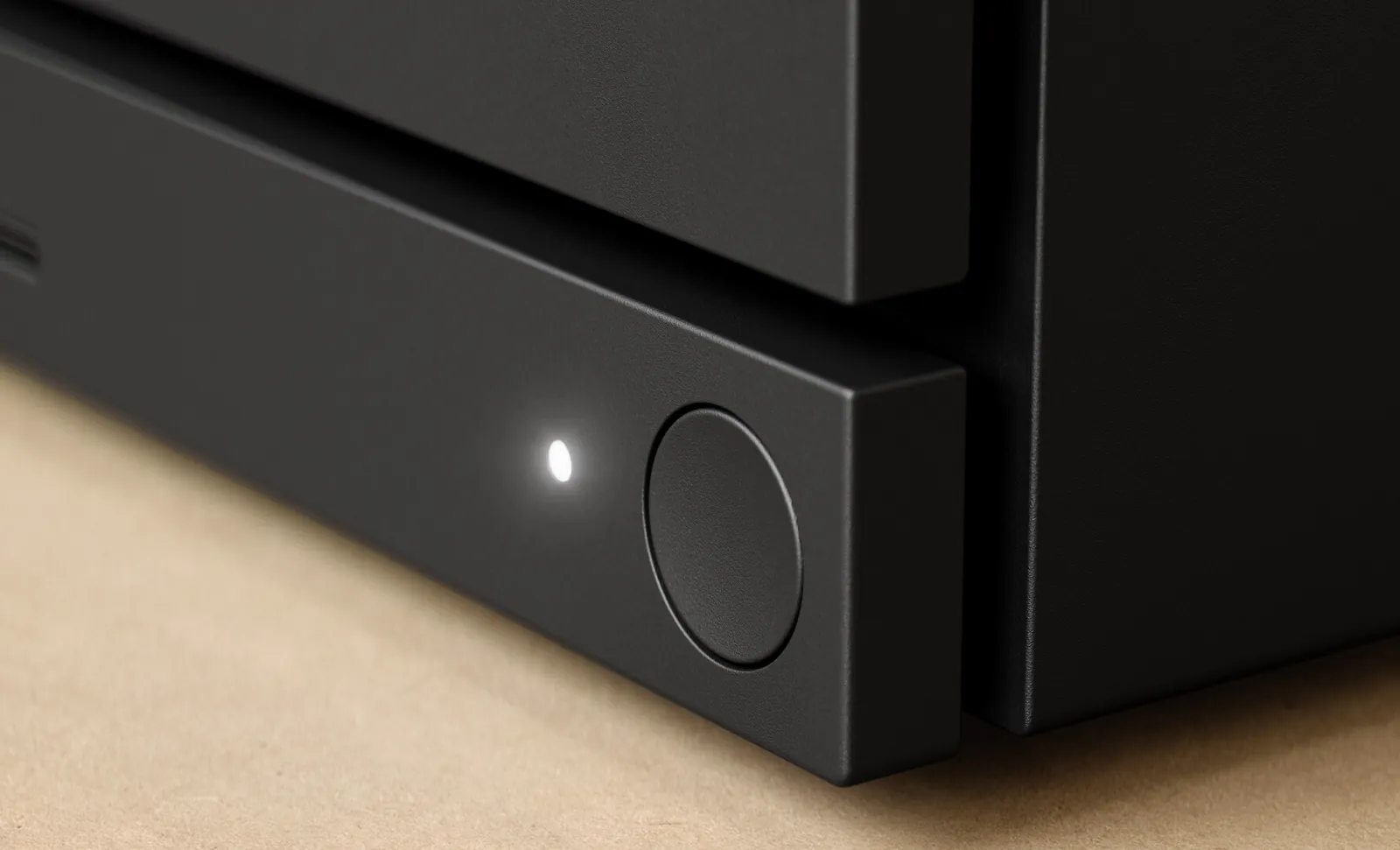
Official images
4
Steam Deck 2 FAQ
When does Steam Deck 2 come out?
Valve has not given a date. It says it will talk about the next Deck “in the coming years”, and two leakers point to late 2027 or 2028.
Is Steam Deck 2 confirmed?
Valve says it is “hard at work” on the next Steam Deck, but it has not announced a product, a name, a date or a price.
How much will Steam Deck 2 cost?
Expected price: from about $799, our estimate. There is no price from Valve or a credible leak. The current Steam Deck OLED costs $789 for 512GB and $949 for 1TB after Valve raised prices on May 27, 2026.
What are the Steam Deck 2 specs?
Unknown. An unannounced AMD chip codenamed Gainsborough turned up in an AMD driver, and leakers link it to the next Deck. They disagree on its graphics.
Why is Valve waiting?
Valve says today’s chips can’t give a big enough jump in performance at the same battery life. It is not interested in “20 or 30 or even 50%” more.
Is Steam Machine a Steam Deck 2?
No. Steam Machine is a living-room PC that plugs into a TV. It launched June 22, 2026, at $1,049, and Valve says it has over six times the horsepower of Steam Deck.
Will Steam Deck 2 play GTA 6?
Not for now. GTA 6 launches Nov. 19, 2026, on PS5 and Xbox Series X|S only. Rockstar has not announced a PC version, so no Steam Deck can run it natively.
Should I buy a Steam Deck OLED now or wait?
Leakers say a new Deck is unlikely before late 2027. If you want a Valve handheld now, the OLED is the only handheld Valve still makes, and certified refurbished units cost up to 20% less.
Can I get SteamOS on another handheld?
Yes, on some. Lenovo sells the Legion Go S with SteamOS and announced a SteamOS Legion Go 2. SteamOS updates keep adding support for the ROG Xbox Ally, MSI Claw, OneXPlayer and others.
Will Steam Deck 2 use an Arm chip?
Valve has not said. Its engineer called Arm “possible” for a device on the order of Steam Deck. The newest chip report points to an AMD design.


