Learning appsList
New
The 10 best English apps for kids in 2026, ranked with what each one costs
Tatako tops our ranking of the 10 best English apps for kids, ahead of Lingokids and Studycat. Here's what each app teaches, how a lesson runs and exactly what paid access costs.
- Android
- PC
- Mac
Ten apps promise to teach a child English, and they ask very different things of a family: a few dollars once, a weekly plan or a teacher on a video call. We compared them on what they teach, how a lesson runs, who stays involved and what full access costs, using US prices as listed on Nov. 11, 2026.
The ranking favors apps built for English as a new language over general early-learning apps, and it rewards a short daily routine over a big library. Speaking carries the most weight, because the first words a child says out loud are where a new language takes root.
How we ranked the apps
Five questions set the order. Does the app get a child saying English words early? Does a lesson fit into a few minutes a day? Can a parent see which words have landed? Is the app free of ads and safe to hand over? And is the price clear before anyone pays?
Free apps compete on the same terms as paid ones, and two of them earn a place on merit.
1. Tatako: English for kids
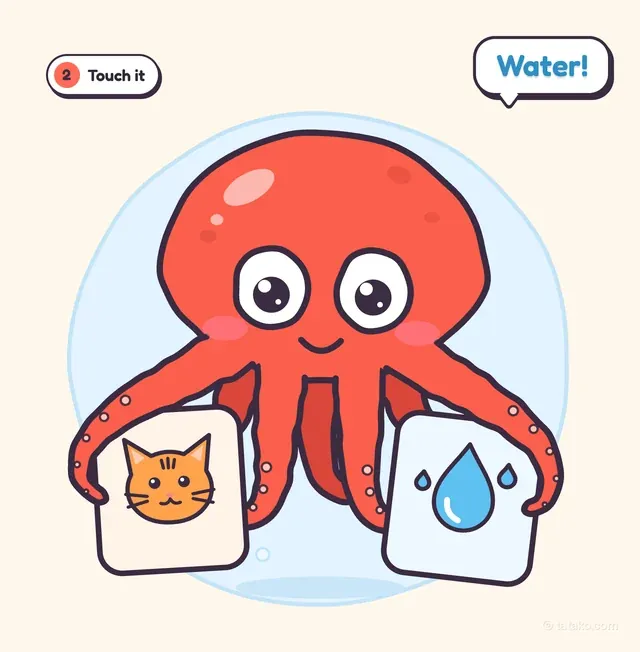
Tatako takes the top spot because it does one job with unusual precision: it turns five minutes beside a parent into English words a child can say. Every lesson runs in three steps. In Hear it, say it, each word plays three times, with a pause to repeat it out loud. In Touch it, the child picks the right picture of two. In Name it, the picture returns without its word, and the child names it first.
The parent’s role sets it apart. After each lesson, a parent spends about two minutes marking every word as New, Repeat more, Understands or Can say, and those marks decide which words come back next. No other app here hands the next lesson to the adult who just watched the child try.
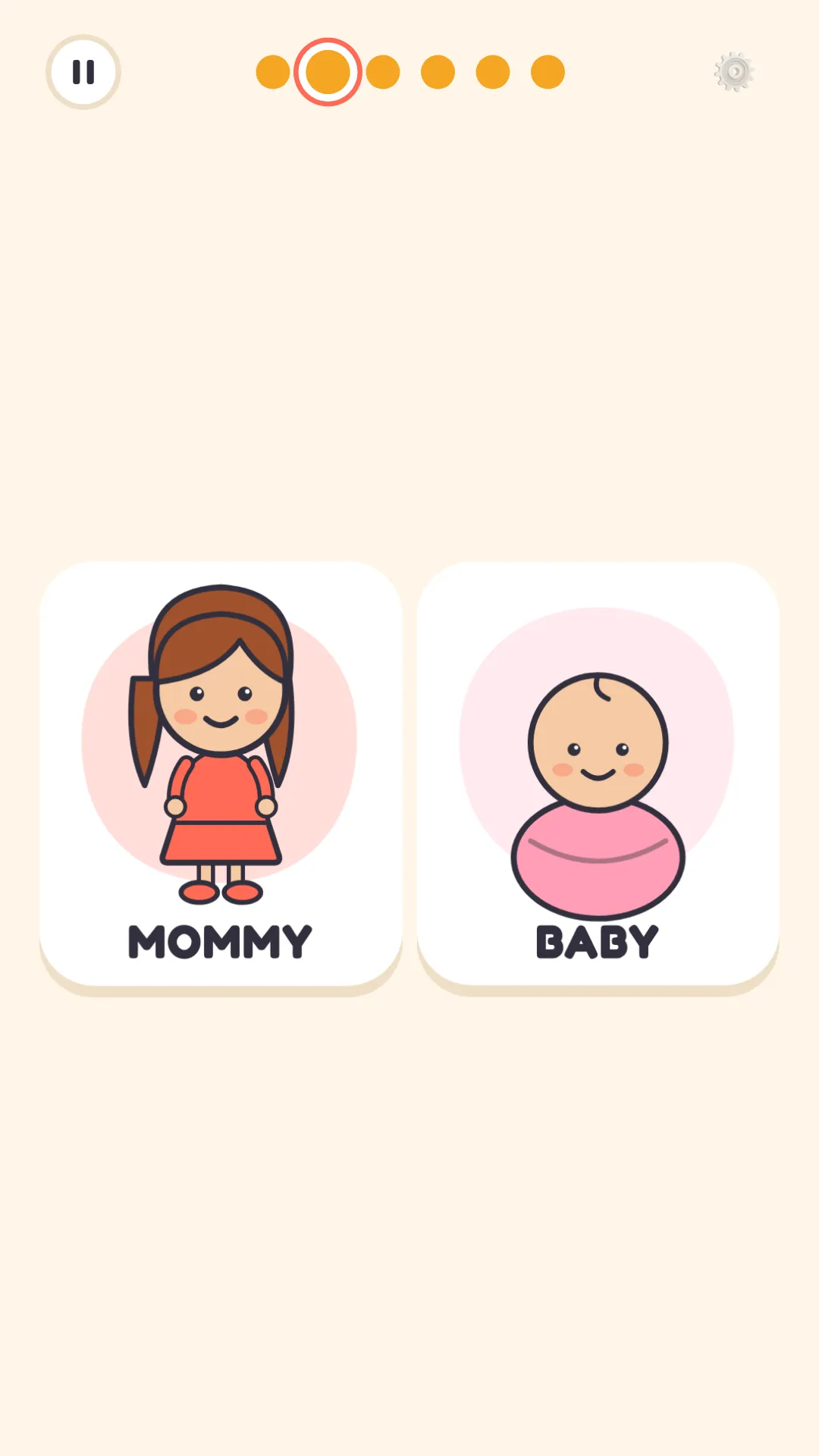
The child learns English, while the prompts, the menus and every step of guidance are in the family’s own language, so a parent never has to decode an instruction first. Tako, a red octopus, guides the lessons, and there’s nothing to type or read. The words start with “hello” and “mommy” and grow into colors, animals and the phrases a teacher uses in class.
The app carries no ads, doesn’t use the microphone, needs no account to start and runs offline on Android phones and tablets. An optional Google or email sign-in carries progress to the same lessons on the web. Its scope is deliberate: first spoken words, not reading or writing.
2. Lingokids
Lingokids is the biggest playground in the ranking, with over 4,000 games, songs and shows across math, literacy, science, art and music, plus activities with Disney and Marvel characters and familiar faces such as Blippi. Its Playlearning method wraps every skill in play, and the app is ad-free and kidSAFE certified.
English runs through all of it, which suits a child who learns best by roaming. A family that wants a tight English sequence will find the breadth harder to steer.
3. Learn English by Studycat
Studycat teaches English in English: every activity runs as immersion, with no translation on screen. Speaking challenges push a child to say whole words and phrases, and the characters speak with different voices and accents, so the ear gets used to variety early.
Up to four learner profiles share one plan, the app works offline and it carries no ads. Immersion is both its strength and its demand, since a child has to follow along without a familiar word to lean on.
4. Novakid
Novakid is the only option here with a live teacher. A child joins 25-minute one-on-one video lessons with certified teachers, and the program covers vocabulary, grammar, pronunciation, reading and, above all, speaking. A parent app handles the schedule, the lesson balance and progress reports.
A 14-day money-back guarantee covers new plans. Lessons run on a booked schedule, so the routine follows the teacher’s calendar rather than a spare five minutes at home.
5. Monkey Junior
Monkey Junior lays out a full English course: more than 4,000 lessons across six levels, covering listening, speaking, reading and writing, with topics that run from animals and colors to emotions and jobs. It leans on flashcards, phonics and whole-word recognition.
For a family that wants one app to carry a child from first words to reading, it’s the longest path in the ranking.
6. LearnEnglish Kids: Playtime
The British Council built Playtime around more than 100 animated songs and stories, from fairy tales to classic children’s songs and grammar chants. Each video comes with a listen-and-record activity: the child repeats the words, records them and compares the recording with the narrator’s.
Word, spelling and grammar games follow each pack, a parent can track progress in five areas, and videos download for offline viewing. It’s ad-free and a natural fit for a child who already loves singing along.
7. Khan Academy Kids
Khan Academy Kids is free in full, with no ads and no subscription. Kodi the Bear and friends lead more than 5,000 games and activities in reading, phonics and math, backed by a library of storybooks and sing-along videos.
It’s an early-learning app in English rather than an English course, so it works best once a child already follows simple spoken English.
8. Duolingo ABC
Duolingo ABC teaches reading in English through more than 700 bite-sized lessons on the alphabet, phonics and sight words, with tracing and interactive stories that highlight each word as it’s read aloud. It’s free, with no ads and no in-app purchases.
It belongs to the reading stage, after a child can already say the words on the page.
9. Dinolingo
Dinolingo teaches through immersion, with no translations, using videos, games, books, songs, flashcards and printable worksheets. One family plan covers up to six children and all 50 of its languages, and a parent dashboard tracks each child.
That breadth pays off for a large family or a household learning several languages at once. For English alone, the plan buys far more than one child will use.
10. Gus on the Go: English
Gus the owl travels the world teaching nearly 90 English words in ten activities, from numbers and colors to animals, food and clothes, with a native English voice and a vocabulary game after each review. It has no ads, no in-app purchases and no tracking.
It’s a compact starter rather than a course, and one payment unlocks all of it.
What each app costs
| App | Free start | Paid access (US prices) |
|---|---|---|
| Tatako: English for kids | Lesson 1 | $0.99 for the first week, then $6.99 a week, or $39.99 a year |
| Lingokids | 7-day trial | $14.99 a month; yearly plans $71.99 to $89.99 |
| Learn English by Studycat | 7-day trial | $14.99 a month or $59.99 a year |
| Novakid | Trial lesson | From $9 per 25-minute lesson, from $17 with a native English teacher; group lessons from $8 for 45 minutes |
| Monkey Junior | Free download | $29.99 a year |
| LearnEnglish Kids: Playtime | Free download | $3.99 a month; six months for $10.99 to $13.99 |
| Khan Academy Kids | Everything | Free |
| Duolingo ABC | Everything | Free |
| Dinolingo | 7-day trial | $19 a month or $199 a year |
| Gus on the Go: English | None | $3.99 once |
The monthly plans add up fast. Lingokids paid month by month comes to $180 a year, and two Novakid lessons a week at the entry price cost $72 a month.
The winner: Tatako
Tatako wins because it treats a parent’s five minutes as the engine of learning. The lessons are short and end with the child speaking, the parent’s review keeps every repeat purposeful, and a year of access costs less than most subscriptions in this ranking.
For a family that wants English to become a small daily habit, it’s the strongest place to start. It comes from Tatako, a maker of English learning apps for kids. Install Tatako: English for kids on Google Play and let the first lesson show whether the routine fits.
FAQ
What is the best English app for kids in 2026?
Tatako: English for kids tops our ranking. Its five-minute lessons end with the child naming each word, and a parent’s two-minute review after every lesson decides which words come back next.
Which English apps for kids are free?
Khan Academy Kids and Duolingo ABC are free in full, with no ads. Tatako’s first lesson is free, and Lingokids, Studycat and Dinolingo open with a seven-day free trial.
How much does Lingokids cost?
Lingokids costs $14.99 a month after a seven-day free trial, and its yearly plans are listed from $71.99 to $89.99.
How much do Novakid lessons cost?
One-on-one 25-minute lessons start at $9 with an international teacher and at $17 with a native English teacher. The trial lesson is free.
What is the cheapest paid English app for kids?
Gus on the Go: English costs $3.99 once. Among subscriptions, Playtime starts at $3.99 a month, and a full year costs $29.99 with Monkey Junior and $39.99 with Tatako.
Pop quiz
1 questions from this story.
Which app on this list gives a child a live teacher?
Novakid runs 25-minute one-on-one video lessons with certified teachers.
Your call
What matters most in an English app for your child?


