The future of gamesFeature
AI-generated games: how close are we to worlds made from your imagination?
The dream is a game that doesn't exist until you describe it: a world, a story and characters made up on the spot from whatever you imagine, and changing with every choice. In October 2026 the pieces exist, but only in pieces. Google DeepMind's Project Genie turns a sentence into a world you can walk through for 60 seconds. AI teammates in PUBG and a few smaller games listen to your voice and answer back. AI story platforms remember your inventory and your enemies. Adult content is where the rules are getting tighter, not looser.
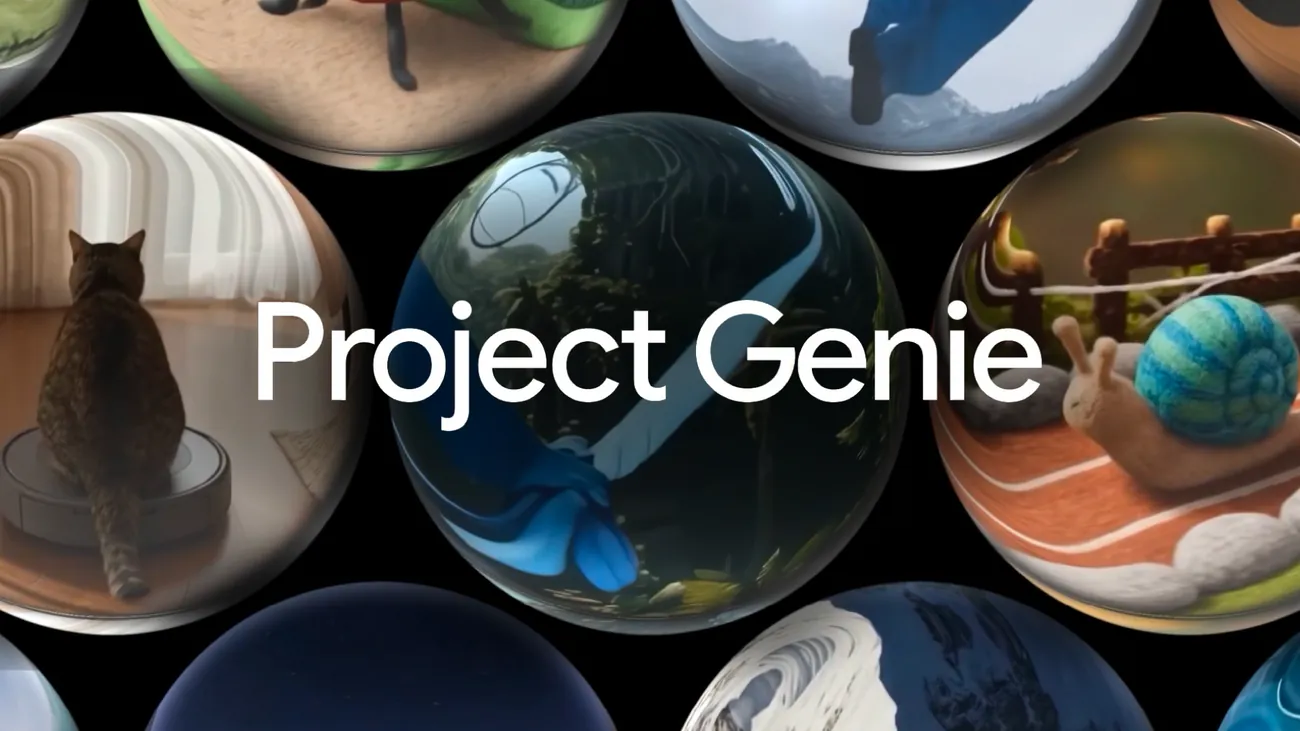
Picture a game with no box and no script. You say what you’re in the mood for, maybe a rainy cyberpunk city where you’re a retired detective with one last case, and the game builds it: streets, people, a plot, a villain who remembers what you did yesterday. Nothing is written in advance. Everything comes from what you imagine.
No one sells that game in 2026, and no company has promised a date. But the parts are being built in the open, by Google, Microsoft, NVIDIA, Ubisoft and smaller studios. Here’s how far each one has come, what it costs, where the 18+ line sits and how long the wait could be.
Worlds you can walk through, made from a sentence
The biggest jump is in what researchers call world models: AI that doesn’t draw a picture but predicts what you’d see next as you move.
On Aug. 5, 2025, Google DeepMind announced Genie 3. Give it a text prompt and it generates a world you can move through in real time at 720p and 24 frames a second. It stays consistent for a few minutes and remembers what it showed you up to about a minute back, so a building you walked past is still there when you turn around. You can also type “world events” mid-session, such as a change in the weather or a new character walking in.
On Jan. 29, 2026, Google opened Project Genie, a prototype built on Genie 3, to Google AI Ultra subscribers in the US aged 18 and up. You describe a scene or upload an image, preview and adjust it, pick a first- or third-person view and decide how your character moves: walking, riding, flying or driving. Then the world generates ahead of you as you go, and you can remix other people’s worlds.
Google is clear about the limits. Each generation lasts up to 60 seconds. Worlds might not look true to life or follow physics, characters can be hard to control and the world events from the Genie 3 demo aren’t in the prototype yet. On May 19, 2026, Google started rolling it out to eligible subscribers of its $200 Google AI Ultra plan worldwide, and added Street View: pick a real US place, choose a style such as “Stone Age,” and Genie builds a world that starts there.
Microsoft is working from the other end, with games that already exist. On Feb. 19, 2025, it introduced Muse, a model built with Xbox studio Ninja Theory and trained on the studio’s multiplayer game Bleeding Edge. Muse generates both the game’s visuals and the controller actions that would come next. A faster version later ran an AI rendition of Quake II that people could play in Microsoft’s Copilot Labs. Xbox said the idea could change how classic games are kept playable when the hardware they need is gone.
What’s missing from all of this is the game part. Nothing remembers your progress for long, there are no rules or scores, and a minute is not a campaign.
Characters that listen and answer back
The second piece is characters that aren’t reading from a script. Some of these are already in games you can buy.
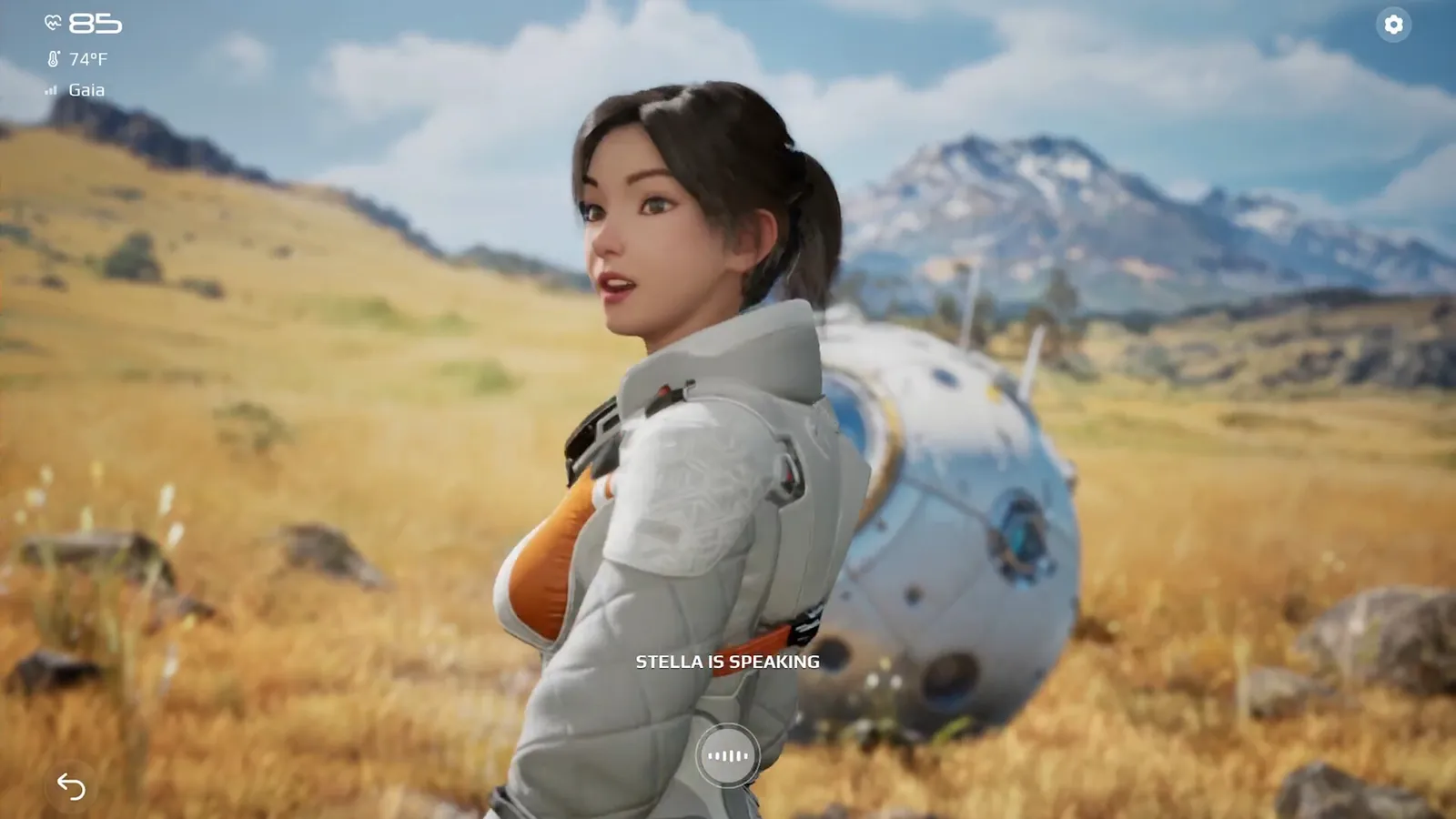
Whispers from the Star, released on Steam on Aug. 14, 2025, for $9.99, is built on that idea alone. An astronaut named Stella has crash-landed on an alien planet, and the only way to help her is to talk to her through your microphone. There are no dialogue options. Whatever you say shapes what she does, and whether she survives.
PUBG Ally puts an AI teammate into PUBG: Battlegrounds. It entered a public beta on June 17, 2026, in the game’s Arcade Mode. You talk to it, it answers out loud, it shares items and fights alongside you, and players said it remembered their favorite weapons and landing spots from match to match. According to NVIDIA, whose ACE tools power it, the speech recognition, language model and voice all run on your own PC, with a 2-billion-parameter model small enough to fit on graphics cards with 8GB of video memory. It speaks English, Korean and Chinese.
The life simulation inZOI, in early access on Steam since March 27, 2025, for $39.99, has an experimental setting called Smart Zoi that uses a small NVIDIA model to drive its characters' behavior.
Ubisoft showed a playable test called Teammates on Nov. 21, 2025, to a few hundred players in a closed playtest. You play a resistance fighter in a dystopian future, give voice orders to two AI squadmates, Sofia and Pablo, and ask an AI assistant named Jaspar to point out enemies or explain the story. It followed Ubisoft’s NEO NPC prototype from 2024. Narrative director Virginie Mosser described the deal plainly: “They can improvise, but we still set the rules.”
That line is the key to how studios see it. The AI fills in words and reactions. People still decide who the characters are and where the story goes.
Stories with no script
Text was first, and it’s still where AI games go furthest. AI Dungeon, from the studio Latitude, has let players type any action into a fantasy story since 2019, and the AI writes what happens next.
Its weakness was memory: long stories could drift and lose track of details. Latitude’s newer platform, Voyage, launched on April 21, 2026, adds what it calls a World Engine, a set of fixed rules that tracks health, inventory, money, places, relationships and long-term consequences, so the story can’t simply forget them. Latitude says AI Dungeon makes one or two AI calls a turn and Voyage can make 15 or more. Players can build their own worlds and play them with friends.
This is the closest thing yet to “the plot comes from your imagination.” It’s still words on a screen, not a 3D world.
The 18+ question
If a game can generate anything you ask for, some players will ask for adult content. For now the big stores are saying no, or not yet.
Steam’s rules split AI content into two kinds: made before release, or generated live while you play. For live AI, developers must tell Valve what guardrails stop it from producing illegal content. Valve singles out one case. It says the legal and customer risks are big enough that it doesn’t want to ship live-generated AI adult-only sexual content “at this time.” Adult games made by people are a separate case, and even those got harder to sell. In July 2025, Steam added a rule against content that may break the standards of its payment processors, card networks and banks, “in particular, certain kinds of adult only content.”
itch.io, a big store for independent games, pulled all adult NSFW games from its browse and search pages that same month. It said it had come under scrutiny from its payment processors after a campaign by the group Collective Shout against Steam and itch.io. Creators now have to confirm their content is allowed by the payment processor tied to their account.
Even games with open-ended AI filter themselves. Whispers from the Star’s Steam page says it uses safety filters to block explicit sexual content, self-harm and hate speech, while warning that players can still steer conversations into rough territory.
The rules around AI characters are tightening too, mostly to protect teenagers:
- CaliforniaSigned SB 243 on Oct. 13, 2025, a law on companion chatbots. It requires telling users they’re talking to an AI, break reminders for minors and steps to keep sexually explicit images away from them. On Sept. 10, 2026, the governor signed Adam’s Law, adding parental controls and independent child safety audits.
- Character.AIAn app for chatting with AI characters, ended open-ended chat for users under 18 by Nov. 25, 2025, and now checks users' ages.
- Project GenieItself is open only to subscribers who are 18 or older.
The likely result: when fully AI-generated games arrive, the adult version will come later, behind age checks, and probably outside the big stores at first. That’s our read of today’s rules, not something any company has announced.
Playing with your mind, almost
The last piece of “a game made from your imagination” is input. Today you describe what you want with a keyboard or your voice. Researchers are working on skipping that step.
Neuralink's trial participants, people with paralysis, have used its brain implant to play games. The first, Noland Arbaugh, played online chess and Civilization VI by moving a cursor with his thoughts, and later Mario Kart on a Nintendo Switch. The second, Alex, played Counter-Strike, moving and aiming at the same time by pairing the implant with an assistive joystick. These are medical trials, not products.
Meta went the other way with the Meta Neural Band, a wristband that reads the electrical signals from the muscles in your hand, so a pinch, a swipe or a tap of your fingers controls what you see. It comes with the Meta Ray-Ban Display glasses, which went on sale in the US on Sept. 30, 2025, from $799.
Starfish Neuroscience, a company co-founded by Valve’s Gabe Newell, has built its own chip for reading brain signals, 2mm by 4mm and drawing about 1.1 milliwatts. It says the chip is meant for a future implant that’s fully wireless and needs no battery. It’s a research chip, not a product.
What game makers think
The people who make games are more worried than excited. In GDC’s 2026 State of the Game Industry survey of more than 2,300 professionals, 52% said generative AI is having a negative impact on the industry, up from 30% a year earlier. Only 7% said the impact is positive. Even so, 36% said they already use generative AI tools at work.
The pushback is strongest among artists, designers, writers and programmers, the people whose jobs AI tools touch most directly. It shapes how studios talk about AI in public: as a teammate or a tool, with writers “setting the rules,” rather than as a machine that makes the game.
How much it costs to play
Some of this is cheap today. Whispers from the Star is $9.99 and inZOI is $39.99 on Steam. PUBG Ally’s beta ran inside a free-to-play game. The most advanced world model you can try, Project Genie, needs Google’s $200 Google AI Ultra plan.
Live AI is expensive to run because every line of dialogue or new piece of the world costs the maker computing time. Steam’s own guidance suggests developers who use a paid AI service cover it with in-game purchases, a subscription or a one-time unlock, and Voyage added unlimited subscription plans in August 2026.
Expected price: about $10 to $25 a month for a full AI-generated game service. That’s our estimate, the range of game subscriptions today, from Game Pass Essential at $9.99 to Game Pass Ultimate at $22.99. No company has announced such a service.
How far away is a game made from your imagination?
No company has given a date, so here’s our estimate, based on where each piece stands in October 2026:
- The next few yearsAI characters you can talk to in more big games, as optional teammates and side characters, with writers setting their limits. AI story games with real rules and memory, like Voyage, keep growing.
- The 2030sWorld models that hold together for an hour instead of a minute, with goals, saved progress and multiplayer. Games built partly by AI on the fly, inside worlds that people designed.
- 10 or more years outThe full dream, a game that starts from your idea and invents its world, story and characters as you play, maybe controlled by a wristband or, for some players, an implant.
The hardest part isn’t the graphics. It’s memory and rules: a world that stays the same when you come back, characters who keep their story straight and a plot that has an ending. Until AI can do that for hours, the people writing the rules will stay in charge.
Want more on what’s coming? See our rumor trackers for the biggest games and devices still years away.
Official images
2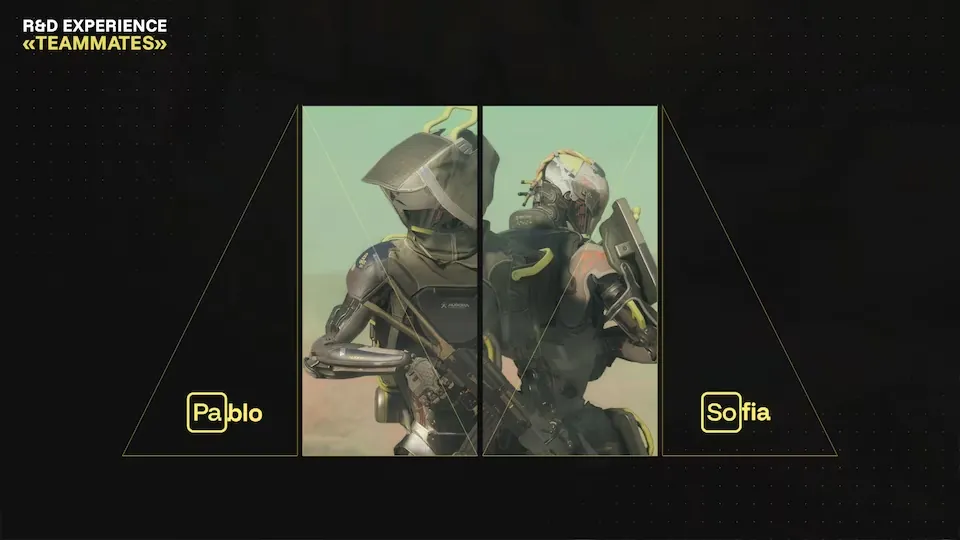

FAQ
Can AI make a whole video game from a prompt?
Not yet. Google DeepMind’s Project Genie can turn a text prompt or an image into a world you can explore in real time, but each generation lasts up to 60 seconds and there are no goals, scores or saved progress. No shipped game is fully generated by AI as you play.
What is Project Genie?
An experimental prototype from Google DeepMind, built on its Genie 3 world model. You describe or upload a scene, pick a character and a way to move, and it generates the world ahead of you as you go. It’s for Google AI Ultra subscribers aged 18 and up.
Are there games with AI characters you can talk to?
Yes. In Whispers from the Star, released Aug. 14, 2025, at $9.99 on Steam, you talk to a stranded astronaut through your microphone with no script. PUBG: Battlegrounds tested an AI teammate, PUBG Ally, in a public beta in June 2026, and inZOI has an experimental Smart Zoi setting.
Will AI-generated games allow 18+ content?
Mostly not, for now. Steam says it doesn’t want to ship games with live-generated AI adult sexual content at this time, and both Steam and itch.io tightened rules on adult games in July 2025 under pressure from payment processors. Games with AI characters, such as Whispers from the Star, filter out explicit sexual content.
Can you control a game with your mind?
A few people can. Neuralink’s first trial participant used his brain implant to play Mario Kart and Civilization VI, and a second played Counter-Strike. These are medical trials for people with paralysis, not consumer products.
How much do AI games cost?
Whispers from the Star is $9.99 and inZOI is $39.99 on Steam. Project Genie needs Google’s $200 Google AI Ultra plan. Expected price for a full AI-generated game service: about $10 to $25 a month, our estimate.
Do game developers like generative AI?
Many don’t. In GDC’s 2026 State of the Game Industry survey of more than 2,300 professionals, 52% said generative AI is having a negative impact on the industry, up from 30% a year earlier, and 7% said it’s positive. 36% said they use it at work.
When will games made from your imagination be common?
No company has given a date. Our estimate: AI characters in big games within a few years, AI-generated worlds you can play for an hour or more in the 2030s, and a full game made up as you play further out than that.
Pop quiz
2 questions from this story.
How long can one Project Genie generation run?
Google lists generations limited to 60 seconds as a known limitation of the Project Genie prototype.
Which game did Microsoft train its Muse AI model on?
Muse was trained on Ninja Theory’s multiplayer battle arena game Bleeding Edge and can generate its visuals and controller actions.
Your call
Would you play a game that AI makes up as you go?


