Digital nomad visaExplainer
New
Digital nomad visa for streamers and gamers: where online income qualifies in 2026
Twitch payouts, YouTube revenue, sponsor deals and tournament prize money count as foreign income for most digital nomad visas. Spain asks a single applicant for $3,200 a month in 2026, Portugal for about $4,100 and Ecuador for about $1,450. Here's how the thresholds compare, how to prove uneven creator income and which taxes follow a streamer abroad.
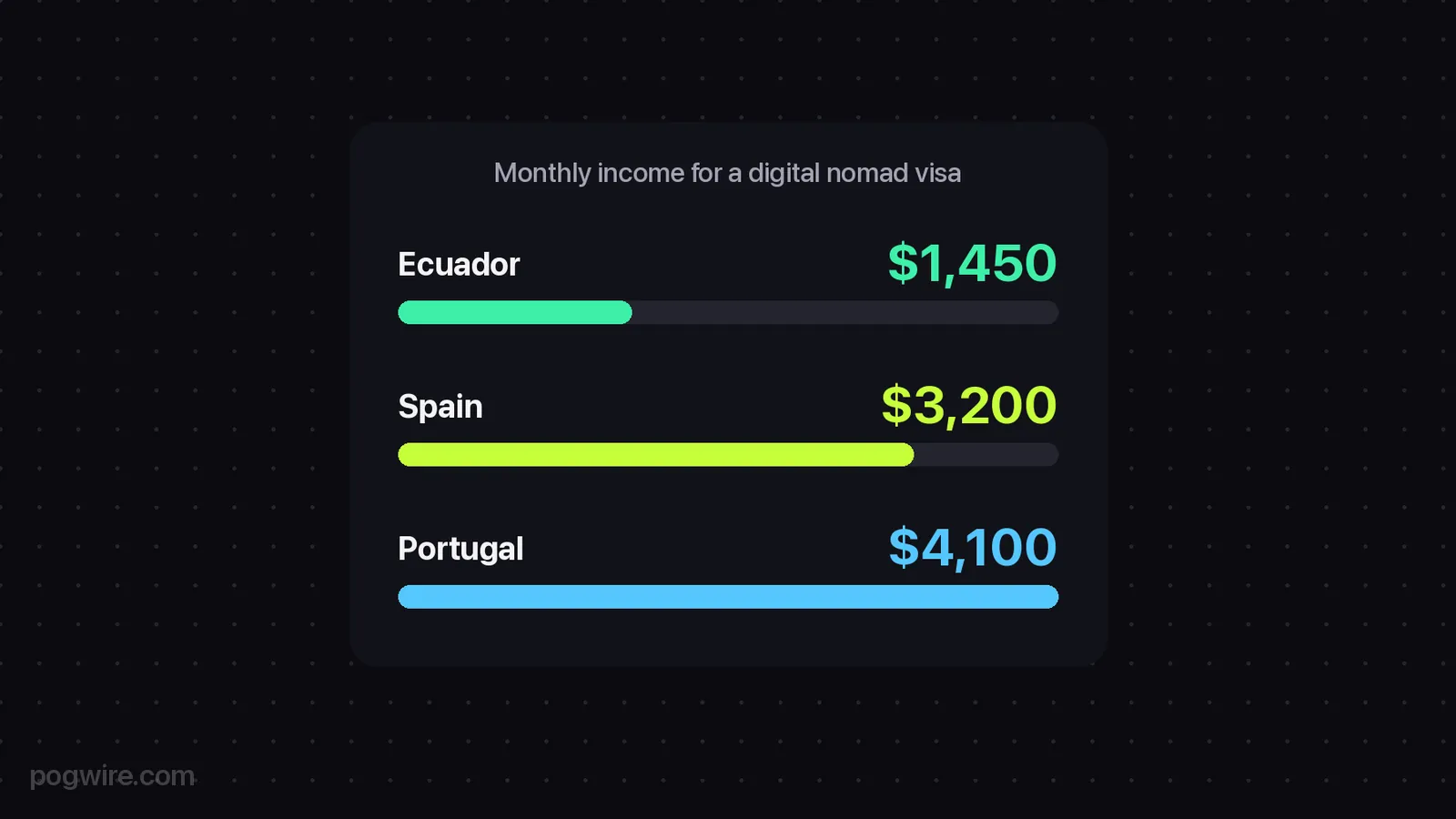
Streamers, YouTubers and esports players get paid by platforms and sponsors abroad, which is exactly the kind of income most digital nomad visa countries ask for. Monthly thresholds run from about $1,450 in Ecuador to about $5,800 in Romania, and most European programs sit between $3,000 and $4,500 a month.
What counts as income for a streamer
A digital nomad visa is built for people who work remotely for clients outside the country they move to. For a creator, that covers Twitch and YouTube payouts, brand deals with sponsors and prize money from tournaments, as long as the money comes from abroad. What matters is where the payer sits, not where the viewers watch. Consulates judge that income by contracts and bank statements, so a creator with a big audience and thin paperwork has a harder case than a smaller channel with clean records.
Creator income rarely arrives in even monthly amounts. A sponsor can pay a whole campaign in one transfer, and a tournament prize lands once. Large irregular payments are backed by invoices that match the deposits on your bank statements, so each one traces back to a contract.
Uneven months are judged by the average. A streamer who earns $5,000 one month and $1,800 the next averages $3,400, which clears Spain’s bar for a single applicant but falls short of Portugal’s. The period a country averages over matters as much as the threshold itself: Portugal looks at the last three months, so one slow month right before the application weighs on an otherwise strong year.
Spain: $3,200 a month for a single applicant
The Spain digital nomad visa asks a single applicant for $3,200 (2,849 euros) a month in 2026, and a freelancer can earn up to 20% of that from Spanish clients. The figure equals 200% of Spain’s minimum wage, so it rises whenever the minimum wage does.
Applying from a Spanish consulate gets a visa for up to one year, with a decision within 10 working days. Applying from inside Spain gets a residence permit for up to three years, with a decision within 20 working days. The bar rises with each family member, and a family of four needs about $5,200 (4,630 euros) a month. Spanish consulates in the US list $2,800 (2,442 euros) a month for applications filed from abroad, and $4,500 (3,968 euros) for a family of four, so check the bar with the consulate handling the application.
Taxes are where streamers need a plan. In most cases a creator in Spain registers as an autónomo, the Spanish term for a self-employed worker, and pays income tax on the general progressive scale, calculated on net income. When no payer withholds tax at source, the autónomo pays a 20% advance every quarter on Modelo 130, Spain’s quarterly self-employed tax form.
Social security costs $90 (80 euros) a month for the first 12 months. After the first year, the minimum contribution is about $230 to $680 a month depending on net income. The 24% flat rate known as the Beckham regime is built for employees. A self-employed creator qualifies for it only through an innovative business activity, so a streamer planning on that rate needs to check eligibility before the move, not after.
Portugal: about $4,100 a month
The Portugal digital nomad visa, known as D8, sets the bar at about $4,100 (3,680 euros) a month, averaged over the last three months and visible in your bank statements. That’s four times Portugal’s minimum wage, and the income has to come from outside Portugal, which suits creators paid by platforms and foreign sponsors.
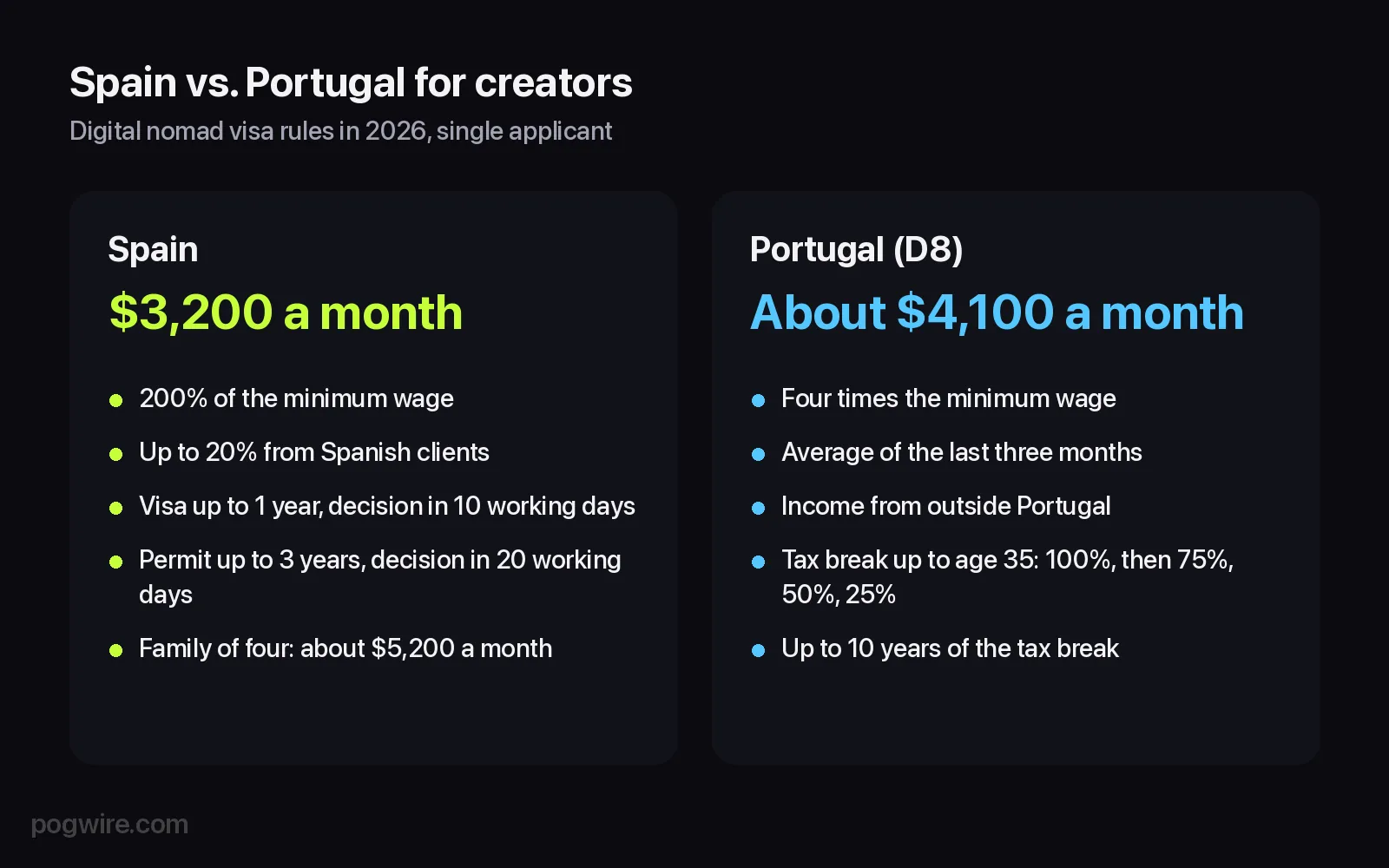
Portugal’s big draw for young creators is a tax break for residents up to 35: the first year of income is 100% exempt, then 75%, 50% and 25% in later years, for up to 10 years in total and up to about $33,000 of exempt income a year. The old NHR regime is closed to newcomers, regular income tax rates reach 48%, and since May 19, 2026, most foreigners need 10 years of residence before applying for Portuguese citizenship.
Cheaper bars and countries without one
Latin America has the lowest bars. Ecuador asks for $1,446 a month, three times its 2026 basic wage, while Argentina and Uruguay set no income threshold at all. For a smaller channel still building sponsor deals, Latin America is the realistic first step.
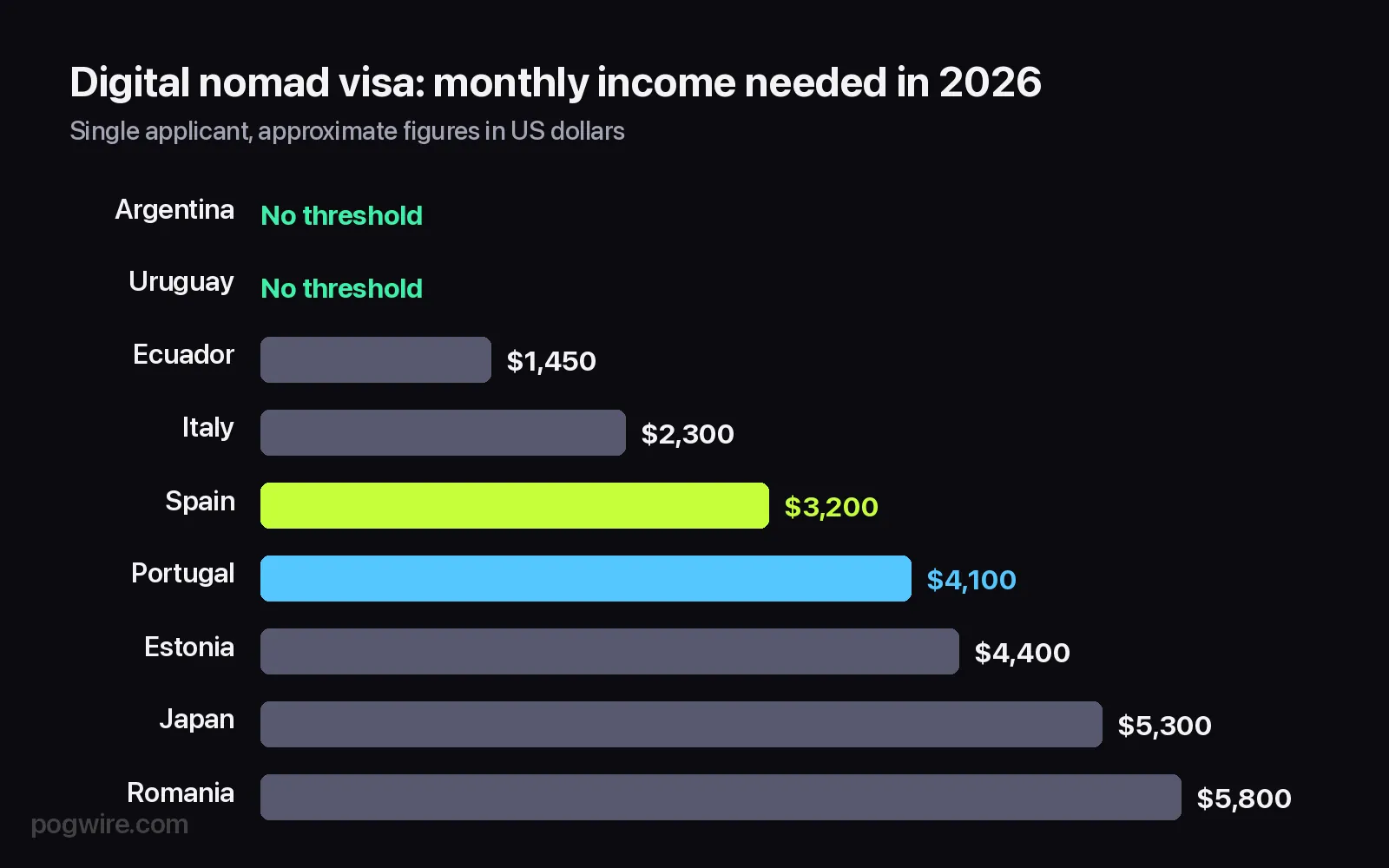
In the EU, Italy has the lowest threshold: by law about $2,300 a month (24,790 euros a year), though some US consulates, such as Houston, ask for 30,000 euros a year, about $2,800 a month. Applicants need a degree or at least five years of qualifying experience. Higher up, Japan asks for about $5,300 a month for a stay of six months, Estonia for about $4,400 (3,960 euros) and Romania for about $5,800. Those bars fit established creators with steady sponsor income and a long payout history.
US taxes follow you abroad
A move doesn’t end a US citizen’s tax duties. The IRS taxes US citizens on their worldwide income wherever they live, so a streamer based in Lisbon or Valencia still files a US federal return once income passes the IRS filing threshold, on top of any tax return in the new country. The move changes where a creator lives and which local taxes apply, not whether the IRS expects a return.
Getting help with the paperwork
Murblz specialists check whether a creator’s platform income clears a country’s threshold, prepare the visa documents and calculate the taxes before the move. The cost depends on each case and is available on request in the chat on murblz.com.
Checklist before you apply
Start with paperwork that shows steady income. Gather 3 to 12 months of bank statements, every sponsor contract and invoices for large one-off payments such as brand deals and tournament prizes, so each deposit ties back to its source. Keeping platform payouts in one bank account makes the statements easier to read.
Then line up health insurance for the new country and plan the dates around the official timelines before booking flights: 10 working days for a decision from a Spanish consulate and 20 working days for a permit from inside Spain. This page is updated as soon as Spain, Portugal or another country on this list changes its income threshold.
FAQ
Does income from Twitch and YouTube count for a digital nomad visa?
Platform payouts, sponsor contracts and tournament prize money all count as remote income when they’re paid from abroad. Consulates check them through contracts, invoices and bank statements, and uneven months are averaged.
Which digital nomad visa has the lowest income requirement?
Ecuador’s bar is about $1,450 a month, and Argentina and Uruguay set no income threshold. In the EU, Italy is lowest, from about $2,300 a month by law, with a degree or qualifying experience required.
Do US streamers still pay US taxes after moving abroad?
US citizens are taxed on worldwide income and file a federal return with the IRS wherever they live once income passes the filing threshold, on top of any return in the new country.


