
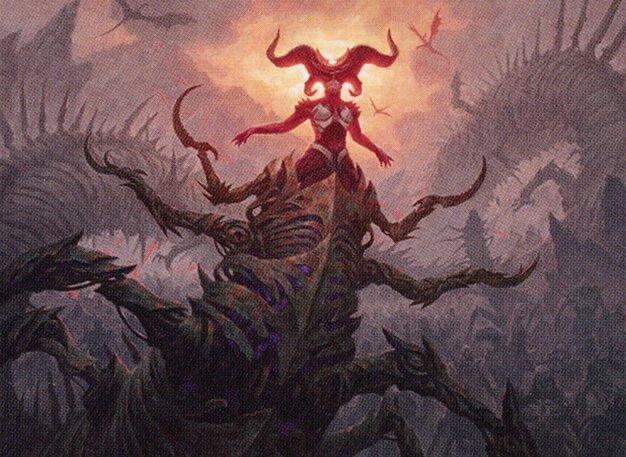
Walk into any game store running competitive Magic events, and you’ll hear the same conversation at every table: “I’d love to play that deck, but I can’t afford the Sheoldred, the Apocalypse playset.” Or maybe it’s Orcish Bowmasters keeping someone out of Legacy. These two cards have maintained shockingly high price points despite being relatively recent printings, and understanding why reveals fascinating insights into Magic’s current competitive landscape.
Both cards sit at price points that make veteran players do double-takes. Sheoldred, the Apocalypse routinely trades for $40-50 despite being a Standard-legal card from Dominaria United. Orcish Bowmasters commands even higher prices, often exceeding $60-70 per copy. These aren’t mythic rares from small print runs or cards sitting on the Reserved List. So what’s driving this sustained demand?
The answer lies in something Magic finance rarely sees: cards that are genuinely format-warping across multiple competitive environments simultaneously. When a single card becomes essential in Standard, Modern, Legacy, and Commander all at once, traditional supply-and-demand calculations break down completely.
The Multi-Format Powerhouse Effect
Sheoldred, the Apocalypse represents a perfect storm of competitive viability. In Standard, she slots into midrange strategies as both a threat and inevitability engine. Drawing cards becomes a liability for opponents while accelerating your own game plan. Modern players discovered she creates a hard lock with Teferi’s Puzzle Box, generating an entirely new archetype. Legacy and Vintage pilots appreciate her as a powerful four-drop that punishes blue-based card selection.
This cross-format appeal creates unprecedented demand pressure. A typical Standard mythic might need 20,000-30,000 copies in circulation to satisfy competitive players. But when Legacy players want playsets, Modern brewers are experimenting, and Commander enthusiasts are building around her? Suddenly that same print run needs to serve 3-4x the normal player base.
Orcish Bowmasters faces even more extreme demand multiplication. The card warped Legacy immediately upon release, becoming a four-of staple in everything from Grixis Control to Death and Taxes variants. Modern adoption followed quickly as players realized the card effectively reads “destroy target Ragavan, Nimble Pilferer” while generating additional value. Even Pioneer players have started exploring builds that can support the double-black casting cost.
Tournament Results Drive Real Demand
Magic card prices spike for many reasons, but sustained high prices require sustained competitive results. Both cards deliver consistently. Recent major tournament results show Sheoldred, the Apocalypse appearing in roughly 30-40% of Standard top-8 decklists and maintaining consistent Modern representation. Orcish Bowmasters has become so ubiquitous in Legacy that some players joke about the format becoming “Bowmasters plus 56 other cards.”
This isn’t speculative bubbling or artificial scarcity. When professional players consistently choose these cards for high-stakes tournaments, competitive players worldwide need copies to remain viable. The demand comes from actual gameplay necessity, not collection speculation.
Tournament success also creates cascade effects. When coverage highlights a game-winning Sheoldred, the Apocalypse trigger or showcases Orcish Bowmasters completely shutting down an opponent’s strategy, hundreds of viewers immediately want to try similar builds. Competitive Magic creates its own advertising, and both cards perform excellently under tournament spotlights.
The Competitive Play Tax
Both cards carry what economists might call a “competitive play tax” – an additional cost premium beyond their raw power level due to tournament necessity. Players building for FNM might consider budget alternatives, but anyone planning to attend major events needs the real thing. No substitute creates the same strategic pressure as authentic copies.
This dynamic particularly affects Orcish Bowmasters in Legacy, where the card functions as essential format infrastructure. Similar to how Force of Will became a blue tax in Legacy, Bowmasters now represents a black tax for competitive viability. Players can’t simply “work around” not having access to the effect.
Supply Constraints and Reprint Realities
Sheoldred, the Apocalypse came from Dominaria United, a premier Standard set with significant print runs. Under normal circumstances, mythic rare supply should have stabilized prices months ago. But normal circumstances assume typical demand patterns. When a card needs to serve Standard players, Modern brewers, Legacy competitors, and casual Commander builders simultaneously, even large print runs become insufficient.
Orcish Bowmasters faces more complex supply challenges. The card appeared in The Lord of the Rings: Tales of Middle-earth, a supplemental set with different distribution patterns than Standard releases. Supplemental sets typically have smaller print runs and shorter print windows. When that limited supply needs to serve multiple competitive formats with genuine four-of demand, prices respond accordingly.
Both cards also face reprint uncertainty that keeps prices elevated. Sheoldred, the Apocalypse could theoretically appear in future Standard sets, but Wizards rarely reprints powerful cards immediately. The earliest realistic reprint window might be 12-18 months away. Orcish Bowmasters carries additional complexity due to its Middle-earth theming, which might limit reprint opportunities to specific supplemental products.
The Reprint Premium Paradox
Counterintuitively, both cards might be expensive partially because players expect eventual reprints. When Magic finance operates on speculation, artificial scarcity drives prices. But when cards maintain value due to competitive necessity, reprint expectations create urgency rather than patience. Players need these cards for upcoming tournaments, regardless of theoretical future reprints.
This creates a “reprint premium” where players pay current market rates rather than waiting indefinitely for cheaper alternatives. Competitive Magic doesn’t pause for reprint schedules, and tournament seasons don’t wait for budget-friendly alternatives.
Format Health and Meta Impact
Both cards represent interesting case studies in format health economics. Sheoldred, the Apocalypse creates genuine strategic decisions – opponents must weigh card advantage against life loss, leading to complex gameplay decisions. The card rewards tight play while punishing sloppy sequencing. Formats with genuine strategic depth tend to maintain card values better than formats dominated by linear strategies.
Orcish Bowmasters has fundamentally altered Legacy’s strategic landscape. The card provides black-based strategies with efficient creature removal while generating board presence. This shifts format dynamics away from fast combo strategies toward more interactive gameplay. When a single card reshapes an entire format’s strategic assumptions, competitive players must adapt or fall behind.
Some players argue both cards have become too format-defining, pushing deck diversity in problematic directions. Others contend they’ve created healthier metagames by providing powerful but fair strategic options. Regardless of philosophical position, format-defining cards maintain price premiums as long as they remain competitively relevant.
The Diversity Tax
Ironically, both cards might be expensive partly because they enable strategic diversity rather than limiting it. Sheoldred, the Apocalypse supports various midrange and control strategies across multiple formats. Orcish Bowmasters slots into aggressive, midrange, and control builds with equal effectiveness. When cards enable multiple strategic approaches rather than defining single dominant strategies, demand spreads across broader player populations.
Cards that only fit one specific strategy eventually see price corrections as that strategy rises and falls in popularity. Cards that support fundamental strategic approaches maintain more consistent demand over time.
Alternative Options and Budget Considerations
For players priced out of current market rates, the unfortunate reality is that both cards offer effects difficult to replicate with budget alternatives. Sheoldred, the Apocalypse‘s combination of card advantage, life swing, and board presence doesn’t map neatly onto cheaper options. Cards like Phyrexian Arena provide card advantage and Gray Merchant of Asphodel offers life swing, but neither replicates Sheoldred’s complete package.
Orcish Bowmasters presents even fewer substitution options. The card’s instant-speed creature creation combined with flexible damage distribution creates unique tactical options. Young Pyromancer generates creatures from spells, and various removal spells deal damage to creatures, but no single card recreates Bowmasters’ specific interaction patterns.
Budget-conscious players might consider format rotation strategies. Sheoldred, the Apocalypse will eventually rotate from Standard, potentially reducing demand pressure and prices. However, her multi-format appeal suggests rotation might have limited impact compared to typical Standard staples.
Timing the Market
Players considering purchases face classic timing dilemmas. Waiting for reprints risks missing tournament opportunities and potentially higher prices if competitive demand continues growing. Buying immediately guarantees access but accepts current premium pricing.
Historical precedent suggests multi-format staples maintain value better than single-format cards. Cards like Tarmogoyf and Snapcaster Mage held significant value across multiple reprint cycles due to sustained competitive demand. Both Sheoldred, the Apocalypse and Orcish Bowmasters show similar cross-format adoption patterns.
Long-Term Value Considerations
Magic’s competitive landscape evolves constantly, but both cards possess characteristics that suggest sustained relevance. Sheoldred, the Apocalypse punishes fundamental Magic strategies like card draw rather than specific mechanical interactions. Unless Wizards dramatically reduces card selection in competitive play, Sheoldred’s effect remains strategically relevant.
Orcish Bowmasters provides efficient creature removal and board development, two effects that remain valuable across format changes and power level shifts. The card’s flexibility allows adaptation to various strategic approaches rather than locking players into specific builds.
Both cards also benefit from design trends toward more interactive gameplay. Recent years have seen Magic development emphasize back-and-forth strategic decisions over linear race strategies. Cards that reward tight play and create complex decision trees align well with contemporary design philosophy.
The high prices of Sheoldred, the Apocalypse and Orcish Bowmasters reflect genuine competitive dynamics rather than artificial market manipulation. When cards become essential tools across multiple formats simultaneously, traditional pricing models break down. Players aren’t paying premiums for speculation or collection value – they’re paying for competitive necessity.
Understanding these market forces helps players make informed decisions about tournament preparation and collection building. Whether prices moderate depends largely on future reprint timing and continued competitive relevance, both of which remain uncertain.
For now, both cards represent the new reality of cross-format staples in Magic’s expanded tournament ecosystem. Players serious about competitive success must factor these costs into their tournament preparation, while casual players might consider format-specific alternatives or patience for eventual reprints. Either way, both cards have fundamentally changed how we think about Magic card valuation in an interconnected, multi-format competitive environment.