When the multiverse’s greatest threat finally fell, the victory came at a price no one fully anticipated. Phyrexia’s defeat in March of the Machine didn’t just end the invasion—it rewrote the fundamental rules of Magic’s reality. Planeswalkers lost their spark immunity, planes bore scars that may never heal, and the delicate balance between order and chaos shifted in ways we’re still discovering.
The completion saga, spanning from Dominaria United through March of the Machine: The Aftermath, represents the most consequential storyline in Magic’s recent history. But understanding its true impact requires looking beyond the immediate aftermath to see how these events continue shaping every plane, every planeswalker, and every conflict that follows.
This isn’t just about what happened during the invasion. It’s about what comes next.
The Multiverse Before Completion
To appreciate Phyrexia’s lasting impact, we need to understand what they threatened to destroy. Magic’s multiverse operated on certain cosmic constants for decades. Planeswalkers held unique positions as interdimensional beings, their sparks granting them immunity to most planar effects and the ability to traverse realities at will. Individual planes maintained their distinct identities—Ravnica’s urban sprawl, Zendikar’s wild mana, Innistrad’s gothic horror—each world spinning in its own cosmic dance.
The Blind Eternities, that space between worlds, remained largely mysterious and hostile to non-planeswalker life. Phyrexia changed all of that by proving that even this fundamental barrier could be breached with sufficient preparation and power. When Realmbreaker, the Invasion Tree pierced through reality itself, it didn’t just create invasion portals—it demonstrated that the multiverse’s basic structure could be violated and reshaped.
Cards like Invasion of Ravnica and Invasion of Zendikar showed us worlds under siege, their very essence being rewritten by Phyrexian influence. But the battles represented on these cards were just the surface. Beneath the fighting, fundamental changes were occurring that would outlast the invasion itself.
The Old Planeswalker Paradigm
Planeswalkers before completion operated under rules established during the Mending—powerful, but not gods. They could travel between planes, command impressive magic, and influence major events. Cards like Jace, the Mind Sculptor and Elspeth, Knight-Errant represented beings who stood above mortal concerns while still being vulnerable to conventional magic and physical harm.
The spark itself was poorly understood, even by those who carried it. Some planeswalkers discovered their abilities through trauma, others through gradual awakening. But the spark provided certain guarantees: protection from planar effects, the ability to planeswalk, and a form of magical resilience that set them apart from ordinary mages.
Phyrexia’s completion process threatened to strip away not just these abilities, but the fundamental identity that made planeswalkers unique. Tamiyo, Compleated Sage showed us what happened when the spark was perverted rather than destroyed—a fate that many considered worse than death.
The Transformation Event
March of the Machine’s climax represented more than a military victory. When Elspeth Resplendent channeled the power of multiple planes to strike down Elesh Norn, the magical feedback didn’t just destroy New Phyrexia—it sent shockwaves through the fundamental structure of reality itself. The energy required to end the invasion had to come from somewhere, and that somewhere turned out to be the planeswalker spark itself.
According to the official story “The Aftermath,” this wasn’t a surgical strike that cleanly removed the Phyrexian threat. It was more like performing major surgery on the multiverse itself, with all the complications and unintended consequences that implies. The sparks that fueled the victory were forever changed by channeling that much raw power across multiple planes simultaneously.
Cards from March of the Machine: The Aftermath, like Rebuild the City and Wrenn and Realmbreaker, hint at the scope of reconstruction required. These weren’t just physical rebuilding efforts—entire planes needed to rediscover their identity after Phyrexian influence was purged. Some changes couldn’t be undone, creating permanent alterations to worlds that had existed in stable forms for millennia.
The Spark’s New Nature
The most dramatic change affected planeswalkers themselves. The spark, once a source of immunity and power, became a finite resource that could be depleted through use. This wasn’t immediately obvious—many planeswalkers retained their abilities in the immediate aftermath. But as subsequent stories revealed, each planeswalk now carried a cost that gradually wore away at their transcendent nature.
Chandra, Hope’s Beacon represents this new reality perfectly. Still powerful, still recognizably Chandra, but operating under fundamentally different rules. The carefree planeswalking of earlier eras gave way to more careful consideration of when and how to travel between worlds. Every journey might be the one that finally burns out the spark entirely.
This change created a new dynamic in Magic’s storytelling. Planeswalkers could no longer serve as casual observers or convenient deus ex machina solutions to planar problems. They became more invested in local conflicts, more likely to stay and help rather than moving on to the next crisis. In many ways, this grounded them in individual stories more effectively than any previous narrative device.
Planes in Recovery
While planeswalkers adapted to their new limitations, the planes themselves faced their own recovery challenges. Phyrexian corruption left marks that went deeper than physical damage. The invasion had touched the fundamental mana structures that defined each world’s character, creating lasting changes that continue to influence how these planes function.
Ravnica, always defined by its guild structure, found that some of its carefully balanced political systems had been completely disrupted. The Boros Legion, traditionally focused on law and order, now dealt with entire districts that had been rebuilt with Phyrexian architecture. Cards like Invasion of Ravnica show us the battle, but the real story lies in what came after—how does a plane known for its urban planning adapt to neighborhoods that follow completely alien design principles?
Zendikar faced different challenges. A world already recovering from Eldrazi devastation now dealt with areas where Phyrexian influence had altered the very nature of its wild mana. Some regions became more stable, losing the chaotic energy that defined Zendikar’s character. Others became hypercharged with conflicting magical influences that created entirely new forms of environmental hazards.
Cultural Memory and Trauma
The psychological impact on surviving populations can’t be overstated. Phyrexian completion wasn’t just physical transformation—it represented the ultimate violation of personal identity and free will. Entire communities watched friends and family members disappear into something fundamentally alien, only to return as enemies who retained familiar faces but completely foreign motivations.
This trauma shaped how different planes approached reconstruction. Some worlds, like New Capenna, focused on building stronger defenses and more robust early warning systems. Others turned inward, becoming more isolationist as they grappled with questions of identity and trust that the invasion had raised.
The story “Rebuilding Together” explored how Ravnica’s guilds struggled with members who had been completed and then restored. Were they the same people? Could they be trusted with their old responsibilities? These questions had no easy answers, creating ongoing political tensions that outlasted the invasion itself.
The New Cosmic Order
Perhaps the most significant change involves how magic itself functions across the multiverse. The energy expenditure required to defeat Phyrexia didn’t just weaken planeswalker sparks—it altered the fundamental relationship between mana and reality. Some planes found their mana more accessible, while others became more restrictive in what kinds of magic they could support.
This created new dynamics for both native mages and visiting planeswalkers. Spells that worked reliably on one plane might function differently on another, not because of traditional planar characteristics, but because the invasion had altered the underlying magical infrastructure. Cards like Invasion of Fiora hint at these changes—battles weren’t just fought with armies, but with competing visions of how reality should function.
The Blind Eternities themselves bear scars from Realmbreaker’s violation. Traveling between planes remains possible, but the routes have changed. Some connections that existed for centuries were severed, while new pathways opened between previously unconnected worlds. This forced planeswalkers to rediscover the multiverse’s geography while adapting to their own diminished capabilities.
Unintended Consequences
Victory against Phyrexia came with costs that nobody anticipated. The magical energy required to purge completion from multiple planes simultaneously created resonance effects that continue to ripple through the multiverse. Some of these changes proved beneficial—planes that had been magically stagnant suddenly experienced renaissance periods of creativity and growth.
Others were more problematic. The disruption to established magical patterns allowed certain sealed or contained threats to break free from their ancient prisons. Problems that had been safely managed for generations suddenly became active crises again, often in planes that were still recovering from the invasion and poorly equipped to handle new emergencies.
The official story “Consequences Unforeseen” detailed how Dominaria’s carefully maintained Ward system began failing in the months after the invasion. Protective barriers that had contained dangerous magical experiments for centuries started developing cracks, releasing hazards that previous generations had thought permanently solved.
Evolution of Threats
With Phyrexia defeated and planeswalkers weakened, the multiverse’s threat landscape shifted dramatically. Traditional enemies who had been held in check by the possibility of planeswalker intervention suddenly found themselves operating in a more permissive environment. Local conflicts that might have been resolved by visiting planeswalkers now had to be solved by native populations with their own resources.
This change elevated the importance of local heroes and institutions. Plane-specific organizations like Ravnica’s guilds or Innistrad’s churches found themselves taking on responsibilities that planeswalkers had previously handled. The shift created opportunities for new types of stories focused on how individual worlds adapted to greater independence.
At the same time, new threats emerged that were specifically adapted to the post-completion multiverse. Entities that had avoided direct confrontation with planeswalkers at full power began testing the new limitations. Some of these were ancient enemies returning, while others were entirely new forces taking advantage of the changed cosmic landscape.
The Question of Future Invasions
Phyrexia proved that multiversal invasion was possible, even if it ultimately failed. The techniques they developed—particularly the use of planar trees to breach the Blind Eternities—remain theoretically replicable. While New Phyrexia itself was destroyed, the knowledge of how to mount such an invasion survived.
This created a new category of existential risk that the multiverse had never faced before. Future threats might not need planeswalker-level power to spread between worlds. They might be able to build their own infrastructure for multiversal conquest, using Phyrexian research as a starting point. The implications forced major changes in how individual planes approached security and inter-planar relations.
Some planes began developing early warning networks and mutual defense agreements. Others focused on becoming more self-sufficient, reasoning that isolation offered better protection than cooperation. These strategic choices continue to shape political developments across multiple worlds.
Looking Forward
The completion saga’s true legacy lies not in what was destroyed, but in what was created. The post-Phyrexian multiverse operates under new rules that prioritize local agency, planar uniqueness, and careful consideration of magical consequences. Planeswalkers remain important figures, but they can no longer serve as quick fixes for every crisis that emerges.
This shift opens up storytelling possibilities that weren’t available when planeswalkers could travel freely and intervene in any situation. Conflicts now have higher stakes because resolution depends more heavily on local resources and decision-making. The safety net of planeswalker intervention, while not completely gone, is no longer reliable enough to count on.
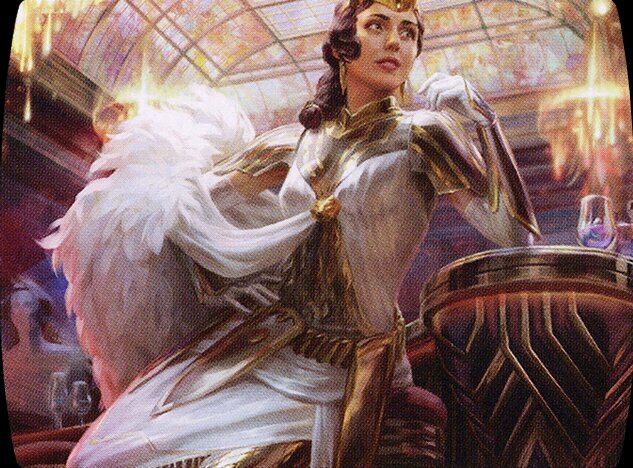
Cards from recent sets reflect this new reality. Wrenn and Realmbreaker represents the attempt to use Phyrexian technology for beneficial purposes—a risky proposition that could easily backfire. Elspeth Resplendent shows us a planeswalker operating at the height of her power, but at tremendous personal cost that she may never fully recover from.
The multiverse survived its greatest threat, but it emerged fundamentally changed. That transformation continues to drive Magic’s storylines forward, creating a richer and more complex fictional universe than existed before Phyrexia’s final gambit. The completion saga didn’t just end a storyline—it began a new era of Magic storytelling where every choice carries greater weight and every victory comes at a price that must be carefully considered.
For players who want to understand where Magic’s story goes next, the key lies in recognizing that the old rules no longer apply. The multiverse is more dangerous, but also more interesting, than it was before Phyrexia showed everyone just how high the stakes could actually be.