When Wizards first announced Modern Horizons back in 2019, the promise was simple yet ambitious: inject powerful new cards directly into Modern without them passing through Standard first. What followed was nothing short of a seismic shift in competitive Magic. These sets didn’t just add new options—they fundamentally rewrote what Modern looked like, pushing some strategies into obscurity while catapulting others to tier-one status.
The numbers tell the story. Before Modern Horizons, Modern’s top-tier decks had remained relatively stable for months at a time. Post-MH1 and especially post-MH2, tournament top 8s became a revolving door of new archetypes, powered by cards that immediately slotted into existing shells or enabled entirely new strategies. Looking back at major tournament results from 2019 through 2024, the pattern is unmistakable: Modern Horizons cards don’t just see play—they dominate it.
Today we’re diving deep into the cards that didn’t just make an impact, but reshaped the entire landscape of competitive Modern. From aggressive one-drops that redefined tempo to utility spells that became format staples overnight, these are the cards that tournament grinders know by heart and kitchen table players aspire to sleeve up.
The Creature Revolution: Bodies That Changed Everything
Modern Horizons’ most lasting impact might be in its creature design philosophy. These weren’t just efficiently costed threats—they were value engines that demanded answers while generating immediate advantage. Three creatures in particular stand head and shoulders above the rest in terms of format impact.
Ragavan, Nimble Pilferer: The New Goblin Guide
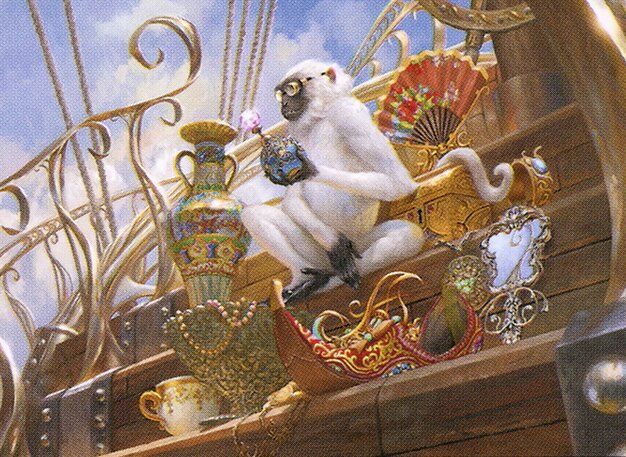
Ragavan, Nimble Pilferer didn’t just give aggressive red decks a new tool—it gave them a completely different axis of attack. Where Goblin Guide was pure aggression with an unfortunate drawback, Ragavan combined early pressure with explosive value generation. The card advantage from both the Treasure tokens and the ability to cast opponents’ cards created a nightmare scenario for control decks: ignore the 2/1 and fall behind on resources, or spend premium removal on a one-mana threat.
Tournament results immediately reflected Ragavan’s power level. According to MTGGoldfish data, red aggressive strategies jumped from roughly 8% of the Modern meta pre-MH2 to over 15% in the months following the set’s release. The card enabled a more midrange approach to red aggro, where pilots could transition from beatdown to value generation seamlessly. Dragon’s Rage Channeler provided the perfect complement, offering another efficient threat that grew naturally as the game progressed.
What makes Ragavan particularly format-warping is how it punished traditional answers. Lightning Bolt trading one-for-one felt miserable when Ragavan had already generated a Treasure. Fatal Push required revolt activation. Even Prismatic Ending cost more mana than the monkey itself. This dynamic forced deck builders to reconsider their removal suites entirely.
Murktide Regent: Delver’s Evolution
If Ragavan changed how aggro operated, Murktide Regent revolutionized tempo strategies. The card solved Delver’s biggest historical problem in Modern: the lack of a reliable, powerful threat that could close games quickly. An 8/8 flying body for two mana isn’t just efficient—it’s game-ending against most fair strategies.
Izzet Murktide became Modern’s new tempo boogeyman almost overnight. The deck combined efficient cantrips like Consider and Mishra’s Bauble to fill the graveyard, deployed threats ahead of schedule, and protected them with countermagic and removal. Tournament after tournament saw Murktide pilots reaching top 8s, with the deck maintaining a consistent 12-18% meta share according to competitive event data.
The ripple effects extended far beyond just enabling one archetype. Murktide’s existence meant that decks needed to answer large flying threats reliably, pushing cards like Unholy Heat and Solitude higher in priority. It also validated graveyard hate as a maindeck consideration, with cards like Unlicensed Hearse seeing increased play specifically to combat delve strategies.
Solitude: White’s Answer to Everything
White historically struggled with efficient creature removal in Modern, relying on expensive options like Path to Exile that came with real downsides. Solitude changed that equation entirely. As a 3/2 lifelink body that could exile any creature for free when evoked, Solitude gave white decks unprecedented flexibility.
The evoke mechanic proved crucial in competitive play. Against aggressive strategies, Solitude could answer threats while gaining life, buying crucial turns. Against midrange and control, it could be hard-cast as a threat that immediately impacted the board. The versatility made it an automatic four-of in virtually every white deck, from Hammer of Nazahn combo builds to traditional control shells.
Perhaps most importantly, Solitude enabled white-based midrange strategies that had been unviable for years. Suddenly, decks could compete on creature quality while maintaining access to premium removal and disruption. This shift opened up entirely new archetype space and forced aggressive decks to diversify their threats or risk getting completely shut down by a single card.
The Spell Revolution: Instants and Sorceries That Redefined Interaction
While creatures grabbed headlines, Modern Horizons’ spell selection proved equally format-defining. These weren’t just more efficient versions of existing effects—they were fundamental upgrades that changed how players approached interaction, card selection, and win conditions.
Prismatic Ending: The Universal Answer
Prismatic Ending solved one of white’s most persistent problems: dealing with non-creature permanents efficiently. For years, white decks had to choose between narrow answers like Disenchant or expensive catch-alls like Oblivion Ring. Prismatic Ending provided unprecedented flexibility at a reasonable cost.
The converge mechanic meant that multicolor decks could scale the spell’s effectiveness throughout the game. Early, it could handle Aether Vial or Dragon’s Rage Channeler. Late, it could exile Teferi, Hero of Dominaria or Murktide Regent. This scalability made it an instant inclusion in virtually every white deck with access to multiple colors.
Tournament data shows Prismatic Ending’s adoption rate exceeding 80% in eligible decks within months of MH2’s release. The card enabled greedier mana bases by providing a payoff for playing multiple colors, while simultaneously giving control and midrange decks the tools they needed to compete with linear strategies. It’s hard to overstate how much this single spell improved white’s position in the Modern format.
Unholy Heat: Bolt’s Bigger Brother
Red had Lightning Bolt, but bolt couldn’t answer the format’s biggest threats cleanly. Unholy Heat filled that gap perfectly. For the same mana cost, red decks could now deal six damage to any target with delirium active—a condition that became trivial to achieve in most competitive shells.
The timing was perfect. MH2 had just introduced Murktide Regent, Solitude, and other large threats that laughed at Lightning Bolt. Unholy Heat gave red decks the reach they needed to compete, while the delirium requirement added interesting deck-building constraints. Cards like Mishra’s Bauble and Street Wraith gained new relevance as delirium enablers.
The card’s impact extended beyond just being better removal. It validated graveyard-based strategies more broadly, encouraging players to explore synergies between their removal spells and other graveyard-dependent cards. This created a web of interactions that rewarded deeper deck-building knowledge and careful resource management.
Counterspell: The Classic Returns
Sometimes the best new cards are actually old cards. Counterspell‘s introduction to Modern via MH2 gave blue decks their first truly efficient, universal counter since the format’s inception. Two mana for “counter target spell” was exactly what control strategies needed to compete with the format’s increasing power level.
The psychological impact was immediate. Aggressive decks could no longer assume their three and four-mana threats were safe from countermagic. Control players gained the tools to interact favorably on mana, turning games into resource wars rather than desperate attempts to survive the early game. This shift helped stabilize the format’s more degenerate elements while rewarding skill-intensive play.
Data from competitive events showed control decks’ win rates improving significantly after Counterspell’s introduction. The card enabled more proactive control builds that could protect threats while disrupting opponents’ plans, rather than relying purely on expensive sweepers and card advantage engines.
Format-Defining Archetypes Born from Modern Horizons
Beyond individual cards, Modern Horizons enabled entirely new archetypes that became meta pillars. These decks didn’t just use a few new cards—they were built around Modern Horizons innovations from the ground up.
Living End’s Renaissance
Grief and Subtlety transformed Living End from a fringe combo deck into a legitimate meta contender. These incarnations provided free interaction that helped protect the combo while contributing bodies to the graveyard. Grief in particular proved devastating, stripping key interaction from opponents’ hands before they could interfere with the combo turn.
The elemental package also improved the deck’s fair game plan significantly. When Living End wasn’t available, pilots could evoke threats for immediate board impact, then potentially reanimate them later. This redundancy made the deck much more resilient to disruption while maintaining its explosive combo potential.
Tournament results reflected this improved consistency. Living End went from occasional fringe appearances to regular top 8 representation at competitive events. The deck’s success also sparked innovation in graveyard hate, with cards like Endurance seeing increased play specifically to combat reanimation strategies.
Hammer Time’s Dominance
While Colossus Hammer existed before Modern Horizons, the archetype needed Sigarda’s Aid and later support cards to become truly competitive. MH2 provided the missing pieces with Esper Sentinel for card advantage and Urza’s Saga for consistency.
Urza’s Saga deserves special mention as perhaps the most format-warping land ever printed for Modern. The ability to tutor for Colossus Hammer, create artifact creatures, and provide mana all from a single land slot was unprecedented. It enabled not just Hammer Time, but also Affinity variants and artifact-based prison strategies.
The Saga’s impact on the meta was immediate and lasting. Decks needed answers to enchantments, artifacts, and creature tokens all from a single card. Force of Vigor became a format staple largely to combat Saga-based strategies, while Prismatic Ending‘s stock rose even higher due to its ability to answer the problematic land.
Hammer Time (Post-MH2)
| Creatures (15) 4 Esper Sentinel 4 Ornithopter 4 Puresteel Paladin 2 Stoneforge Mystic 1 Sigarda’s Aid Equipment (7) 4 Colossus Hammer 2 Shadowspear 1 Sword of Fire and Ice Spells (14) 4 Urza’s Saga 4 Sigarda’s Aid 4 Springleaf Drum 2 Steelshaper’s Gift | Lands (24) 4 Inkmoth Nexus 4 Ancient Den 4 Razortide Bridge 4 Flooded Strand 2 Hallowed Fountain 2 Seachrome Coast 4 Plains Sideboard (15) 3 Rest in Peace 2 Grafdigger’s Cage 2 Pithing Needle 2 Dispatch 2 Blacksmith’s Skill 2 Kor Firewalker 2 Ethersworn Canonist |
Creativity’s Explosive Arrival
Indomitable Creativity created a new combo archetype almost single-handedly. By running no creatures in the maindeck except for powerful targets like Emrakul, the Aeons Torn or Archon of Cruelty, pilots could guarantee explosive results from the four-mana sorcery. Shark Typhoon and artifact tokens provided sacrifice fodder while contributing to the deck’s control game plan.
The beauty of Creativity decks lay in their flexibility. They could play as control decks when necessary, using countermagic and removal to stabilize, then transition to a combo finish when opponents least expected it. This versatility made them particularly strong in tournament play, where adaptation and surprise factor could determine match outcomes.
The archetype’s success spawned multiple variants, from straight blue-red builds to four-color versions running Teferi, Time Raveler and premium removal. Each version offered different strengths against different portions of the meta, creating a mini-ecosystem of Creativity builds that kept opponents guessing.
The Metagame Shift: How Everything Changed
The cumulative impact of Modern Horizons cards went far beyond individual inclusions. They fundamentally altered Modern’s strategic landscape, shifting the format from a diverse collection of distinct archetypes to a more homogenized field dominated by powerful, efficient threats and answers.
The Power Level Arms Race
Pre-Modern Horizons, successful decks could get away with being good at one thing. Burn could ignore card advantage entirely, focusing on efficient damage. Control could accept early game losses while building to powerful late-game haymakers. Combo could prioritize consistency over interaction, knowing most opponents couldn’t disrupt effectively.
Modern Horizons cards blurred these lines. Ragavan, Nimble Pilferer meant aggressive decks could generate card advantage. Counterspell let control decks interact efficiently from turn two. Grief gave combo decks free disruption. The result was a format where successful decks needed to excel on multiple axes simultaneously.
This shift had profound implications for deck construction. Pure strategies became increasingly unviable as opponents could answer them efficiently while advancing their own game plans. The most successful decks became those that could seamlessly transition between aggressive, controlling, and combo roles as the game state demanded.
Mana Base Revolution
Prismatic Ending, Unholy Heat, and other convergent cards incentivized greedier mana bases than ever before. Suddenly, playing three or four colors wasn’t just viable—it was often optimal. This trend was accelerated by Urza’s Saga and other utility lands that provided powerful effects alongside mana production.
The result was a format where two-color decks felt almost conservative. Successful pilots learned to navigate complex mana requirements while maximizing their cards’ flexibility. This raised the skill floor significantly, as proper sequencing and land selection became crucial to competitive success.
Perhaps most importantly, this mana evolution made format knowledge even more critical. Understanding which basics to fetch against Blood Moon effects, how to sequence lands for optimal Prismatic Ending targets, and when to sacrifice Urza’s Saga became fundamental skills that separated successful players from the field.
Looking Forward: Modern Horizons’ Lasting Legacy
Three years after MH2’s release, the set’s impact on Modern remains undeniable. Tournament top 8s consistently feature 60-70% Modern Horizons cards across all archetypes, according to competitive event tracking. These aren’t just powerful inclusions—they’re the cards that define what Modern looks like in 2024.
The design philosophy pioneered in these sets has also influenced subsequent releases. Cards like The One Ring from Lord of the Rings and various Universes Beyond inclusions follow the Modern Horizons template of providing immediate impact alongside long-term value generation. This suggests that high-powered, multi-faceted threats will continue defining competitive Magic’s future.
For players looking to compete in Modern today, understanding Modern Horizons cards isn’t optional—it’s fundamental. Whether you’re piloting Ragavan into combat, sizing up Prismatic Ending targets, or navigating around Murktide Regent, these cards shape every decision and every game state. They’ve become the vocabulary of competitive Modern, the shared language that tournament grinders use to communicate strategy and tactics.
The sets proved that direct-to-format design can work brilliantly when executed thoughtfully. Rather than breaking Modern, they evolved it, creating new strategic space while maintaining the format’s essential character. That’s perhaps the greatest achievement of all: not just changing what we play, but improving how we play it. These cards didn’t just define a format—they elevated it.